Ferrari Luce EV Branding Backlash: The Cost of Chasing Trends Over Heritage
The announcement of Ferrari’s first electric vehicle, the Ferrari Luce, sparked a wave of disappointment and confusion among enthusiasts and industry experts. Instead of celebrating a new chapter for the iconic brand, many reacted negatively to what they saw as a serious misstep in design and brand identity. The decision to outsource the interior design to Sir Jony Ive, Apple’s former Chief Design Officer, through his creative collective LoveFrom, raised eyebrows. Collaborating with his long-time partner Marc Newson and Ferrari’s in-house team, Ive brought a minimalist, tech-focused aesthetic that tries to incorporate some of Ferrari’s traditional values, but the result is something of a Frankensteinian clash of old and new.
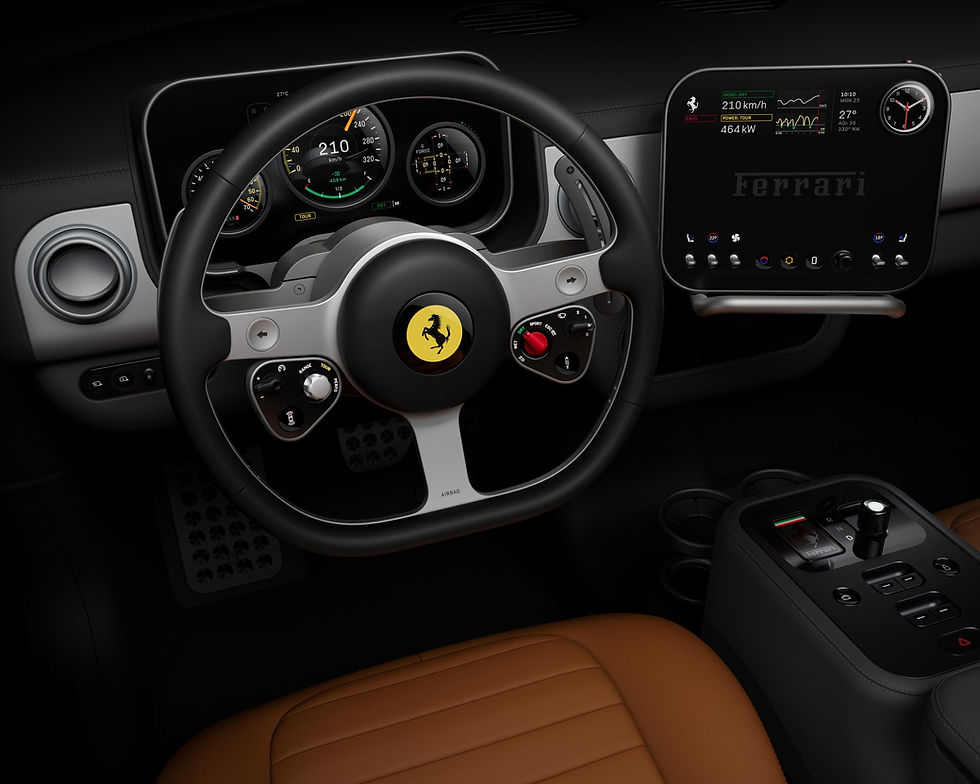
This article explores why Ferrari’s move to chase current design trends, rather than relying on its century-long heritage, has backfired. It also examines the broader lesson brands face when they lose sight of their unique identity in pursuit of fleeting style.

The Ferrari Luce EV and Its Design Controversy
Ferrari has long been synonymous with bold, beautiful, assertive (but not necessarily aggressive) styling and interiors that reflect both its racing heritage and its history of era-defining design. The Luce EV, however, presents a stark departure. The exterior features smooth, flowing lines and a subdued color palette that some describe as bland compared to Ferrari’s usual dramatic flair. Inside, the cabin is dominated by clean surfaces, touch-sensitive controls, combined with a simplified stack of traditional analog gauges.
Sir Jony Ive’s design philosophy, shaped by years at Apple, emphasizes simplicity and user experience. While this approach revolutionized consumer electronics, it feels out of place in a Ferrari. The Luce’s interior looks more like a high-end tech gadget than a driver-focused sports car. This disconnect has alienated Ferrari’s core audience, who expect visceral engagement and unmistakable character.
Why Ferrari’s Outsourcing Was a Branding Mistake
Ferrari’s decision to hand over interior design to an external creative collective rather than its own seasoned designers was a gamble. The brand’s in-house team has decades of experience blending luxury with performance, crafting interiors that feel both exclusive and purposeful. By contrast, LoveFrom’s design leans heavily on minimalism and futuristic aesthetics, which do not align with Ferrari’s DNA.
This move sent a message that Ferrari values trendiness over tradition. The market senses when a brand abandons its roots, and Ferrari’s loyal customers reacted accordingly. The Luce’s interior feels generic and sterile, while the generic exterior styling completely lacks any emotional connection that Ferraris usually evoke. The Luce is not even polarizing...it is just plain bland. A design more suitable for a contemporary kitchen appliance than an ultra-luxury exotic performance car.
The Market’s Reaction and Impact on Ferrari’s Image
The backlash was swift and vocal. Automotive critics pointed out that the Luce looks like a “tech company’s idea of a car” rather than a Ferrari. Forums and social media buzzed with disappointment, with many fans expressing that the new design stripped away the passion and excitement they associate with the brand.
This reaction matters because Ferrari’s strength lies in its unique identity. The brand commands premium pricing not just for performance but for the exclusivity, experience and heritage it offers. When a product feels disconnected from that identity, it risks eroding customer trust and loyalty.
Lessons for Brands Chasing Design Trends
Ferrari’s experience with the Luce EV highlights a broader truth: chasing design trends can dilute your brand’s essence. Trends come and go, but a brand’s core values and identity should remain consistent. Here are some takeaways for brands facing similar crossroads.
Most assuredly, we will not be the only ones saying this, and you will probably hear others spit out the same-old boilerplate consulting advice like:
Trust your heritage: Use your history and expertise as a foundation for innovation.
Balance innovation with identity: New designs should evolve the brand, not erase what makes it special.
Know your audience: Understand what your customers value beyond aesthetics.
Collaborate wisely: External designers can add value but should complement, not replace, in-house knowledge.
Create emotional connections: Design should evoke feelings that align with the brand’s story.
But all that is just pointless, meaningless, vague, superficial marketing mumbo-jumbo.
What Ferrari Should Have Done Differently
It would be absurd to believe that Ferrari would be anything today were it not for the men who were inspired to throw caution to the wind and pursue their passions come hell or high water. Enzo, Pinafarina and countless other designers, engineers, mechanics and racecar drivers pured their heart and soul into being the world's best...on the track and on the road.
One could argue that Elon Musk pursued precisely the same level of passion in pursuit of his vision: to prove to the world the mass-market commercial viability of electric cars. And, to reinvent the automobile and automobile manufacturing from the ground-up from a tech-company perspective.
But one cannot and should not confuse these two spirits. They are in many ways diametrically opposed. The former produced some of the most winning motorsport teams, iconic automotive designs, exhilarating driving dynamics, and exclusive ownership experiences the motoring world has ever known. The latter produced commodity EVs that are little more than minimalist tech gadgets on wheels--appliances to get you from A to B with the bare minimum of creature comforts demanded by the market (high-performance Tesla "Plaid" models notwithstanding).
Why did anyone at Ferrari think it would be a good idea to lean in the direction of Tesla's ultra-high horsepower Plaid EV appliance model instead of doubling-down on a century of design, luxury, and motoring heritage combined with cutting-edge 21st century EV power? And it is really a shame because early concepts and spyshots showed Ferrari was certainly moving more in the right direction with the Luce. So what went wrong? Why did Ferrari second guess its gut instincts?

Such a strategy would not only have respected Ferrari’s heritage while signaling a thoughtful transition to electric mobility, it would have imbued the resulting product with a PASSION and INTENSITY in the form and function of the finished vehicle that would scream to onlookers: COME DRIVE ME. Sadly, the Ferrari Luce barely whispers, "we've lost our mojo."


Comments